segunda-feira, 19 de março de 2012

Brazil's Lula

Ted Goertzel é um cientista social norte-americano que já há algum tempo tem se dedicado ao estudo da vida política brasileira. Depois de significativas análises sobre os tempos de FHC, Goertzel coloca na praça agora uma biografia de Lula, em língua inglesa (BrownWalker Press, 224 págs.). Permito-me dizer que uma biografia escrita por um estrangeiro  sobre uma personalidade de outro país pode conter um risco e uma vantagem. O risco: não ter informação suficiente. A vantagem: ser mais imparcial do que um autor nacional. No caso específico de Goertzel, parece-me a mim que ele escapa do risco e nos brinda com a vantagem. A conferir. Abaixo, a capa do livro e uma pequena síntese. 
LulaFrontCover.JPG 


Raised in a shack in the Brazilian northeast by a single mother, Lula da Silva rose from a working-class background to become a union leader, organizer of Brazil’s Workers’ Party, and, in time, the most popular president in Brazilian history.  In admiration, Barack Obama called Lula “the most popular politician on Earth” – perhaps a fitting title for a man who finished eight years as Brazil’s president with popularity ratings over 80%.  As president, he rose above ideology to build his country’s self-esteem with a growing economy and relief from poverty.  This is the first full biography of a democratic leader whose remarkable success will be an inspiration for decades to come. 
Spanning his childhood, his years in the labor movement, his four campaigns for the presidency, his two presidential terms and the election of his successor, Dilma Rousseff, this volume focuses on Lula as a personality and explores his impact on Brazilian Society.  Elected on an ill-defined platform of “change,” Lula’s inaugural address promised that hope had conquered fear and that it was time for Brazil to blaze a new path.  However, he understood that what most Brazilians actually wanted was relief from stressful and demanding changes.  Drawing strength from his mother’s courage, optimism and religious faith, Lula forged a new leadership style emphasizing consensus and contrasting sharply with that of many populist Latin American leaders.
Lula offers a model of leadership for an age when democratic revolutions sweep the globe and presidents-for-life are thrown out in disgrace.  Despite his overwhelming popularity, Lula refused to allow his supporters to attempt to amend the Brazilian constitution to allow him a third term as president.  His biography is essential reading for anyone concerned with building democratic order in a developing society. 

domingo, 18 de março de 2012

Secção Journal Articles/UNESCO: Paper Mudança Climática e Educação Ambiental

A secção 'Journal Articles' do sítio da UNESCO (re)apresenta um trabalho que escrevi sobre mudança climática e educação ambiental, num dos periódicos da sua rede, em versão ligeiramente modificada em relação ao periódico em que ele foi originalmente publicado. Sessão Journal Articles/UNESCO aqui: http://www.unesco.org/new/en/education/themes/leading-the-international-agenda/climate-change-education/cce-clearinghouse/research-documents/journal-articles/. Reproduzo a referida versão abaixo.


Climate Change and Environmental Education

“Environmental educators must formulate a program of instruction which both holds the capitalist economy responsible for the global ecological crisis, while at the same time pointing out new directions in the fight against the ecosystem’s collapse”
by Ivonaldo Leite
Probably many of the scenarios presented in the Intergovernmental Panel on Climate Change’s (IPCC) most recent reports on the natural and social impacts of global warming will take place not in the year 2100 or even 2050. It seems they will occur much sooner than that. Actually, we can already see several examples of environmental collapse. Therefore, it is critically urgent to adopt policies which truly address the environmental problems we face. Environmental education is a vital part of this call to action. As an intellectual mechanism, environmental education serves both as a means of persuasion and a way to bring about behavioral change.
But first we need to clarify the kind of environmental education that can actually achieve this goal, since, in general, government policies regarding environmental protection have been superficial and do not focus on the true causes of the ecological crisis. This is not a surprise. Governments today are simply incapable of preventing the ecological suicide which the prevailing capitalist logic is paving the way for. This superficial approach, however, is not due to a lack of understanding of the environmental crisis; rather it is an inherent consequence of the functioning of the capitalist economy.
Profit is the main driving force behind capitalism, and this requires unlimited expansion, unlimited accumulation and commodification. These conditions are essential for the continuous reproduction of the capitalist system. Aside from all other technicalities, this is the main ideological aspect of the climate issue: Capitalism is incapable of dealing with the global warming issue in a serious and responsible way.
Therefore, environmental educators must formulate a program of instruction which both holds the capitalist economy responsible for the global ecological crisis, while at the same time pointing out new directions in the fight against the ecosystem’s collapse.
A new approach to environmental education
Humanity is a part of nature and a product of it. Hence, the notion of the alienation of human labor from what it produces is directly connected to an understanding of the alienation of human beings from nature. The commodification of nature under the capitalist mode of production and private ownership has led inevitably to the degradation of nature. Instead, as John Bellamy Foster has pointed out in his book, Ecology Against Capitalism, the process of labor needs to be seen as a metabolic process between human beings and nature, a process by which the human being, through his or her own actions, mediates, regulates and controls this metabolism with nature in a rational, non-destructive way.
Consequently, environmental education must develop a conception of ecology that establishes a link between the natural and the social world. About this and other alternative proposals, it is important to set some definite guidelines for the configuration of a new program of learning in environmental education.
With this in mind, here are three guidelines we believe are essential to a successful educational program.
1. Environmental education must emphasize the social implications of the ecological crisis. The effects of desertification, shortage of water, and the food crisis will impact poorer parts of the globe disproportionately. For instance, the poor will have more difficulty finding reliable alternative sources of water and food, as well as gaining access to medical care and emergency help in case of natural disasters. In this context, the effects of Hurricane Katrina on New Orleans serve as a highly symbolic warning.
The global environmental crisis will cause economic insecurity, and it will cause healthcare, food, water, and adequate housing to be in short supply. Therefore, the class struggle in the third world and beyond will take the form of struggles to protect and defend basic resources like food and housing. The process of privatization, however, will also deepen in the period ahead, making all natural resources difficult to obtain by most of the population around the world.
This situation is very grave, since the current division between rich and poor has, in effect, created two separate worlds. For example, approximately 1.2 billion people live on less than $1 per day, while nearly 3 billion live on less than $2 per day, according to some World Bank estimates. Globalization has had a negative impact on poor women and children, who are denied basic human rights en masse and who, in an attempt to combat their dire situations, including mass starvation and homelessness, each year enter by the millions into economic relations that amount to slave labor, or are force to become involved in the horrors of the global sex trade.
2. The second guideline highlights the French sociologist Henri Lefebvre’s concept of “space” and its application to the question of living standards and agricultural production. In order to understand how Lefebvre conceives of space, we will now clarify his theory on this subject.
As Rob Shields asserts in his book, Lefebvre, Love and Struggle: Spatial Dialectics, although Lefebvre may have thought that his concept of “everyday life” was his most important contribution to social theory, and may have insisted on the fundamental importance of dialectical materialism, his most influential contribution has been his investigation of the social construction and conventions of space.
Lefebvre understood the concept of space as an issue cutting across disciplines, which serves as an ideal example to illustrate his demand for an end to the technocratic specialization of academia and the bureaucratic organization of government. He progressively extended his concept of “everyday life,” beginning with the rural life of the French peasantry, moving on to suburbia, and ultimately discussing the geography of social relations in more general terms. In this process, there are two phases in Lefebvre’s research on the spatial
The first deals with what he called “the urban.” The second deals with social space and what he called the “planetary” or global. Lefebvre defined the essence of urbanness, Shields writes, “as the simultaneity of many discrete social interactions brought together in a centrality,” and “analyzed the impact of changing social relations and economic factors under capitalism upon the quality of access and participation in the urban milieu”.
Lefebvre asks: What is the urban? His answer is paradigmatic for environmental education.
For him, the urban is not a certain population, a geographical size or a collection of buildings. Nor is it a node, a trans-shipment point or a centre of production. It is all of these together, and thus any definition of the urban must search for the essential quality of all these aspects. The urban is social centrality, where the many elements and aspects of capitalism intersect in space, despite often merely being part of the place for a short time, as is the case with goods or people in transit. “City-ness” is the simultaneous gathering and dispersing of goods, information and people. It goes without saying that some cities achieve this more fully than others – and hence our own perceptions of their greater or lesser importance as cities per se.
Lefebvre goes beyond previous philosophical debates on the nature of space, and beyond human geography, planning and architecture (which have always considered people and things merely “in” space), to present a coherent theory of the development of different systems of spatiality in different historical periods. These spatializations “are not just physical arrangements of things but also spatial patterns of social action and routine, as well as historical conceptions of space and the world (such as fear of falling off the edge of a flat world). They add up to a socio-spatial imaginary and outlook, which manifests in our every intuition”.
This system of space functions on one level. At the most personal level, we think of ourselves in spatial terms, imagining ourselves as an ego contained within an objectified body. People extend themselves out into space as a spider extends its limbs by means of a web, and we become as much a part of these extensions as they are of us. Arrangements of objects, work teams, landscapes, and architecture are the concrete instances of this spatialization. Equally, ideas about particular regions, media images of cities, and perceptions of “good neighborhoods” are other aspects of this space, which is necessarily produced by each society as it makes its mark on Earth.
Lefebvre’s thoughts on spatialization make at least two important contributions to environmental education. The first is to show what space is and how it is produced. The second is the methodological orientation of his perspective – in others words, an interdisciplinary orientation. As we have seen, his thought moves across many scientific and academic boundaries. Such an approach is fundamental in environmental education, since the study of the environment is an interdisciplinary subject. In fact, the relevance of this provides the basis for our third guideline.
3. Lefebvre’s approach allows us to develop an interdisciplinary approach to teaching environmental education. But in order for this to happen, it is first necessary to answer the following question: What precisely is meant by an interdisciplinary approach?
This ambiguity appears immediately in the multitude of synonyms for interdisciplinarity. For example, the words pluridisciplinarity, multidisciplinarity and transdisciplinarity are used in similar ways. However, they all have different senses.
Pluridisciplinarity often is only a juxtaposition of various disciplines. Transdisciplinarity is more ambitious, in that it proposes a conceptual unification between disciplines. Interdisciplinarity, however, assumes a mutual sharing of knowledge between disciplines and is based essentially on a systemic approach. In this way, interdisciplinary teaching is understood as teaching in which two or more disciplines participate in an interdependent process.
Any field of study lends support to the concept of an interdisciplinary approach, insofar as a scientific fact is always an abstraction from a larger complex, and also insofar as that abstraction necessarily marks out a circumscribed area corresponding to a particular inquiry, specific in its approach, its method, and its epistemological presumptions. In fact, all disciplines need allied subjects: physics needs mathematics, biology needs physics and chemistry, while mathematics is most frequently used as an abstract instrument of calculation or logic by other disciplines. Similarly, all disciplines need a mutually accepted language as an auxiliary instrument.
This approach is particularly valuable in dealing with environmental problems, where a phenomenon must be studied through different but complementary approaches. This is the case, as one UN study found, with urbanism, “in which converge such different disciplines as sociology, demography, psychology, architecture, applied physics, and aesthetics.” This is a technique which is equally useful in studying pollution, A subject which involves not only biology, physics and chemistry, but also economics, sociology and politics. All of these disciplines come into play when the closing of a plant creates massive unemployment in an economically fragile region, or if the installation of an expensive antipollution system makes a product uncompetitive with foreign goods. In all environmental studies, the contributions of numerous disciplines converge to reveal all the phenomena and problematic aspects. A monodisciplinary approach, on the other hand, tends to fragment such relationships.
Beyond the Commodification of Nature
Today’s environmental conditions are the result of social, political, economic, and technological decisions. Therefore, environmental education should aim at establishing a new set of social, environmental and political values based on the above guidelines.
Decisions relating to social development and improvement of the lives of individuals are often based on preconceived assumptions about what is useful and “good for us.” However, educated people should be able to ask themselves questions such as: “Who made this decision? On what basis? What are the immediate goals? Were the long-terms effects evaluated?” In short, he or she should be in a position to know how such decisions were made and on what set of values they were based.
Consequently, an educational strategy for dealing with climate change and the environmental crisis must begin by calling attention to the fact that the ecological question has a political dimension. All educational action must connect to a political perspective on social change. We therefore conclude that environmental education is an essential part of the fight against the capitalist-induced environmental crisis. It is true that the scientific reports may not offer us much hope, but as Bertolt Brecht once said, “if you fight you might lose, but if you do not fight you have already lost.” Humanity’s hope is in that fight.
--------------
Ivonaldo Leite, Ph.D, is a Professor of Sociology of Education in Federal University of Pernambuco, Brazil.
Copyright © 2012 Climate & Capitalism. 

sábado, 17 de março de 2012

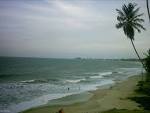
Desenvolvimento local, meio ambiente e educação: Paisagens da Baía da Traição-PB


Registros do Seminário que realizamos na Baía da Traição-PB, no âmbito de um Projeto que coordenamos sobre desenvolvimento local, meio ambiente e educação. E também um trabalho produzido pela bolsista do Projeto, a graduanda em Pedagogia Heloísa Almeida. 


POLÍTICAS EDUCACIONAIS, MEIO AMBIENTE E SUSTENTABILIDADE: UMA ABORDAGEM A PARTIR DO MUNICÍPIO DA BAÍA DA TRAIÇÃO-PB

Autora: Heloisa Melo de Almeida
Graduanda em Pedagogia – Universidade Federal da Paraíba /Campus do Litoral Norte

INTRODUÇÃO
Cotidianamente, os meios de comunicação registram desastres ambientais por todo o   mundo, resultantes de furações, terremotos, chuvas, enchentes, deslizamentos de terra, devastação florestal, poluição de rios, etc., os quais causam grandes impactos  na biodiversidade, que é definida por Santos (2011) como a variabilidade de organismos vivos de todas as origens, compreendendo, dentre outros, os ecossistemas terrestres, marinhos e outros aquáticos e os complexos ecológicos de que fazem parte.
A maioria das tragédias ecológicas é resultado da ação do homem sobre a natureza. Os gases poluentes e as queimadas, por exemplo, aumentam a temperatura do planeta, gerando o fenômeno conhecido como aquecimento global. A isto, devem ser somados problemas, como os decorrentes do acúmulo de lixo gerando por um modelo de desenvolvimento sustentado pelo consumismo desenfreado. Este é o cenário da crise ambiental contemporânea, presente tanto nas grandes cidades como nas médias e pequenas.
O presente trabalho resulta de um Projeto de Pesqusia-ação desenvolvido no estado da Paraíba, no município da Baía da Traição.
O município de Baía da Traição está situado a 84 km da capital João Pessoa e pertence à Microrregião do Litoral Norte, que, por sua vez, se insere na Mesorregião da Mata Paraibana. Sua área de 94,9 km corresponde a 4,81% da área da Microrregião do Litoral – 1.971,9 km².
A Baía da Traição apresenta um clima quente e úmido segundo a classificação de Köppen, com temperatura máxima de 29ºC e mínima de 24ºC. O período de inverno começa no mês de maio e termina em setembro. A precipitação pluviométrica anual é de 408,70 mm
A sede do município se desenvolveu incrustada entre o canal do rio Sinimbu e o oceano, ocupando uma faixa de terra central alongada, a qual vai se estreitando à medida que se aproxima da falésia do Forte Acajutibiró. Tal situação geográfica impossibilitou a expansão da malha urbana, além desses limites e também após esses. Toda a área territorial do município é reduto da Terra Indígena Potiguara, cujo núcleo administrativo da Fundação Nacional do Índio – FUNAI – está situado a aproximadamente 2 km da referida sede.
Nas últimas duas décadas, o município de Baía da Traição vem sofrendo constantes modificações no que diz respeito ao ambiente natural e à configuração de sua malha urbana.
Tem sido alvo da especulação imobiliária, por conta das excelentes condições ecológicas, belezas cênicas, recursos naturais e pelas exuberâncias de seus ecossistemas costeiros compostos pelos manguezais, que representam 5% da área total do município.  
Por sua vez, as questões de infra-estrutura e esgotamento sanitário são precárias, no que se refere ao destino das águas pluviais e de uso doméstico. Parte destas águas, é reabsorvida pelas várzeas do rio Sinimbu, nas imediações da cidade e segue rumo ao mar.
No período de alta estação, que também corresponde ao carnaval, essas questões sanitárias são agravadas pelo excesso de veranistas e visitantes, vindos da capital do estado, da Região do Brejo paraibano, como também das cidades circunvizinhas. Nessas ocasiões, o abastecimento de água não comporta a demanda excedente.
É em tal contexto que o Projeto vem sendo desenvolvido, envolvendo docentes-pesquisadores do Departamento de Educação da Universidade Federal da Paraíba/Campus IV e discentes do Curso de Pedagogia, tendo como objetivo geral investigar os problemas ambientais do município e implementar ações inspiradas no Programa Nacional de Educação Ambiental (PRONEA) junto a escolas e comunidades, no sentido de despertar a sensibilização  para o desenvolvimento local sustentável.
Ou seja, tem-se em mente a perspectiva geral do PRONEA, que tem como foco todos os níveis e modalidades de ensino, estudantes, entidades públicas e privadas, grupos sociais em condições de vulnerabilidade e a população em geral. Os seus objetivos estão voltados principalmente para estimular e apoiar processos de educação ambiental na construção de valores e relações sociais, conhecimentos, habilidades, atitudes e competências que contribuam para a participação de todos na edificação de sociedades sustentáveis; estimular e apoiar processos de formação de educadores ambientais;  estimular e apoiar processos de formação ambiental continuada e inicial de professores dos sistemas de ensino; contribuir com a organização de voluntários, profissionais e instituições que atuam em programas de intervenção, ensino e pesquisa em educação ambiental; contribuir para a internalização da dimensão ambiental nos projetos de desenvolvimento e de melhoria da qualidade de vida, nas políticas e programas setoriais do governo em todas as suas.

MATERIAL E METODOLOGIA
Definido como pesquisa-ação, o Projeto estruturou-se num primeiro momento buscando apreender um panorama sobre a literatura da área, bem como levantar informações a respeito do contexto em que ele é desenvolvido, ou seja, o município da Baía da Traição-PB. Neste sentido, a primeira etapa foi delimitada como uma fase de investigação, de visita a campo, de observação e interação com o público-alvo do Projeto. Além das escolas, como universo da ação, tem-se considerado também a interlocução com entidades da sociedade civil, a exemplo de entidades comunitárias.

RESULTADOS E DISCUSSÕES
Como resultados até agora alcançados, podem ser destacados os seguintes: 1) verificação da degradação do rio Sinibu, que envolve a Baía da Traição; 2) o acúmulo do lixo na cidade, sobretudo na época de veraneio, que não recebe nenhum tratamento específico; 3) a queima da cana-de-açúcar; 4) a derrubada da mata nativa para produção de carvão.  No que se refere ao desenvolvimento de ações, dentre outras, podem ser relacionadas: 1) encontros com a comunidade, onde são abordados, como forma de conscientização, a temática ambiental; 2) contactos com educadores locais; 3) realização de um seminário para tratar dos problemas ambientais.
Dos resultados obtidos, pode-se inferir que, embora no município a questão ambiental seja realçada com frequência, o fato é que ela não tem sido tratada de forma sistemática, com iniciativas que tenham em conta as demandas da cidade, designadamente no que se refere à educação ambiental. Também, do ponto de vista do que se entende por Educação Ambiental, há, de modo geral, uma incompreensão das suas concepções. Neste sentido, entendemos ser pertinente, aqui, uma rápida focagem sobre elas. Conforme o modelo teórico construído por Leite (2010), três concepções têm estado presente nas iniciativas sobre Educação Ambiental: a naturalista, a sócio-instrumental e a contra-hegemônica.
No que se refere à primeira dimensão (a definição de ambiente), é de se reter que a concepção naturalista compreende o meio ambiente apenas como ambiente físico, que diz respeito à natureza, pondo-se em sintonia com a formulação que remonta à elaboração de Ernst Haeckel, referente à morfologia geral dos organismos, a qual constituiu a ecologia como área científica, vinculada à biologia, tendo como propósito estudar a relação entre as espécies animais e o seu meio orgânico e inorgânico. 
Trata-se de uma concepção que não tem em conta a relação com o social, logo, por exemplo, não se detém em considerações acerca dos fatores econômicos, pondo em evidência o modo como eles interferem no meio ambiente, a sua dinâmica na eclosão do desequilíbrio ecológico. Assim, pela omissão, tal concepção não questiona o caráter degradante da economia de mercado sobre o meio ambiente. Fundamentalmente, o que aqui se tem é uma abordagem a partir de um único campo disciplinar, isto é, a biologia, sem interação com outros campos científicos. A sua perspectiva de educação ambiental é regida pela lógica escolar, seja nas próprias escolas, seja em iniciativas externas à esta, pelo que, no básico, não se tem em apreço os saberes das comunidades e dos sujeitos sobre os quais a ação da educação ambiental deve incidir. Ela assume uma postura de, normativamente, prescrever comportamentos a serem adotados. De modo geral, além dos biólogos, trata-se de uma concepção que tem como porta-vozes outros representantes das ciências físico-naturais.
A concepção sócio-instrumental. Muito embora tenha pontos de contacto com a concepção naturalista, ela tem uma perspectiva que a diferencia desta. A este respeito, pode ser mencionado que a concepção sócio-instrumental reconhece/assume a dimensão social na discussão sobre a questão ambiental, mas o faz de um modo que, com algumas exceções, significa uma justaposição entre o natural e o social, quer dizer, sem concebê-los como interação, constituindo uma mesma e única realidade. Essa concepção reconhece os efeitos devastadores da economia de mercado sobre o meio ambiente; porém, as iniciativas que propugna são pensadas dentro dos marcos da referida economia, apelando para ideia de desenvolvimento sustentável, o que quer dizer, também, que as propostas para enfrentar a crise ecológica não devem romper com a lógica estrutural do sistema. Até por assimilar o aspecto social, essa concepção faz o discurso da interdisciplinaridade, o que, não poucas vezes, representa meramente a junção (estanque) de enfoques disciplinares distintos. Como a concepção naturalista, a concepção sócio-instrumental centra-se, também, fundamentalmente na educação escolar, prescrevendo, de modo normativo, ações educacionais para a população, numa postura talvez até mais exógena do que a da concepção naturalista. Isto porque são prescrições, em muitos casos, realizadas por organizações externas, como a UNESCO. Desta forma, trata-se de uma concepção normativa sistemicamente.  É sócio, porque assimila a dimensão social, mas instrumental, porque é uma concepção que tem como propósito básico instrumentalizar a ação educativa, em função do seu background, não tendo em atenção uma focagem analítica que ponha em questão os determinantes sistêmico-estruturais responsáveis pela crise ambiental.
A concepção contra-hegemônica. Trata-se de uma perspectiva  inteiramente diferente em relação às duas anteriores, sobretudo  porque diz respeito a uma concepção alternativa às abordagens hegemônicas, dominantes, no campo do debate ecológico e da educação ambiental. Daí ela ser contra-hegemônica. Um exemplo dos seus porta-vozes, é a Ecosocilist Intenational Network (EIN), rede/movimento social que emergiu duma Conferência em Outubro de 2007 em Paris, com a participação de representantes, além de França, da Argentina, Austrália, Bélgica, Brasil, Canadá, Chipre, Dinamarca, Grécia, Itália, Suíça, Reino Unido e EUA.
Diante deste quadro teórico sobre as concepções de educação ambiental, quando temos em conta as perspectivas presentes na Baía da Traição, no âmbito escolar e da ação governamental, fica evidenciada falta de entendimento das bases necessárias para o desenvolvimento de ações consistentes.
CONCLUSÃO
Conclusivamente, é de assinalar a existência de um conjunto de desafios, na Baía da Traição, a serem enfrentados em face da degradação ambiental verificada no município. Faz-se necessário o desenvolvimento de iniciativas tanto no plano macro como no plano micro. Isto é, nas escolas, com ações imediatas, mas também, indispensavelmente, na esfera governamental, por parte do poder público municipal e estadual. Da mesma forma, é imprescindível que a sociedade civil local - através de sindicatos, associações, movimento comunitário, etc. –se mobilize em defesa do desenvolvimento sustentável local.

Referências bibliográficas
BRASIL. MINISTÉRIO DA EDUCAÇÃO E  MINISTÉRIO DO MEIO AMBIENTE. Programa Nacional de Educação Ambiental. Brasília: 2003.
GOVERNO DO ESTADO DA PARAÍBA. Diretrizes Municipais: Proposições para o Plano Diretor de Desenvolvimento Municipal da Baía da Traição. João Pessoa: 2001.
IBGE. IBGE Cidades: Paraíba, Baía da Traição. Disponível em:
 LEITE, Ivonaldo. Trabalho docente e opções curriculares em educação. In: IX Colóquio sobre Questões Curriculares/V Colóquio Luso-Brasileiro. Faculdade de Psicologia e de Ciências da Educação da Universidade do Porto. Porto, Portugal: 2010.
SANTOS, Antonio Silveira R. Biodiversidade, bioprospecção, conhecimento tradicional e o futuro da vida. Disponivel em: http://www.ccuec.unicamp.br/revista/infotec/artigos/silveira.html. Acesso em: 15 out. 2011.
             

sexta-feira, 16 de março de 2012

Uma Revolução com flores na mão: os cravos portugueses


Já foi dito 'que quando o extraordinário se faz cotidiano, isto é revolucionário'. A dimensão simbólica desta compreensão me veio à mente exatamente ao rever um vídeo de 'Capitães de Abril', filme de Maria de Medeiros, sobre a Revolução dos Cravos Portuguesa. Talvez aqui pelos trópicos nunca tenha sido bem apreendido o significado histórico do 25 de Abril de 1974 em Portugal (inclusive para a oposição brasileira à ditadura militar, que para lá mandou exilados). "Daqui a pouco", contudo, quadro décadas nos vão separar da insubmissão dos capitães e do movimento popular português, que pôs termo a cerca de meio século da ditadura fascista implantada por Salazar. Parece-me a mim ser uma altura oportuna, deste lado de cá do Atlântico, para recuperar o significado histórico da Revolução dos Cravos. O momento retratado pelo vídeo é emblemático. É certo que, hoje, em território luso, as perspectivas que foram descortinadas pelo 25 de Abril constituem-se numa imagem distante. O 25 de Novembro de 1975, com Mário Soares à cabeça, mudou o rumo dos coisas. Mas, efetivamente, entre o 25 de Abril de 1974 e o 25 de Novembro, Portugal terá vivido o seu "momento Comuna de Paris" - o que levou o saudoso Francisco Rodrigues fazer vir a lume um livro sugestivamente denominado 'O Futuro era Agora'. Como as coisas mudaram de rumo, Francisco depois escreveu 'Abril Traído'. Ele bem sabia do que falava, figura histórica que foi no seio do marxismo português, e de uma franqueza/coerência política que, durante mais de uma década em que privei da sua amizade, poucas vezes vi em alguém. No Brasil, o único texto sobre Francisco Rodrigues e sua obra foi produzido pelo meu amigo Alder Júlio/UFPB (disponível aqui:  http://www.consciencia.net/francisco-martins-rodrigues-um-militante-atipico-na-rotina-esteril-dos-pcs/ ). Ler Francisco, assistir o filme Capitães de Abril e ouvir Zeca Afonso, com a sua música-símbolo do 25 de Abril - passos para recuperar o significado histórico da Revolução dos Cravos